

The missile, named FAAZ, means 'victorious'. According to the Pakistan Army, it is equipped with an advanced terminal guidance system designed to engage aerial targets at long distances. However, Pakistan has not disclosed its range, operational capabilities or speed.
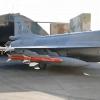
The video released by the Pakistani military shows a JF-17 Thunder fighter jet firing the missile during the test. Pakistan has identified the tested weapon as the FAAZ-IIR, an Imaging Infrared (IIR) version of the missile.
Before developing the FAAZ-IIR, Pakistan had worked on the FAAZ-RF air-to-air missile, which operates using active radar-guided technology. The two variants use different guidance systems, with the IIR version relying on imaging infrared technology.
The FAAZ-IIR's claimed capabilities have drawn attention because of its potential role in long-range aerial combat. Pakistan says the missile features an advanced terminal guidance system designed to hit aerial targets at long distances. Imaging infrared guidance technology is believed to have a potential range of around 100 kilometres.
Pakistan claims that its FAAZ-RF active radar-homing missile has a range of 100 kilometres and can reach speeds of Mach 3.5. The country has also said it is developing the FAAZ-2, which could have a range of approximately 180–200 kilometres.
One of the most important components of a long-range air-to-air missile is its seeker. When a missile has a range exceeding 100 kilometres, it generally relies on guidance from the launching aircraft's radar and data link during much of its flight. As it approaches the target, the missile's seeker identifies and locks onto the aircraft independently before guiding the weapon towards it.
The seeker is installed in the missile's front section and plays a crucial role in identifying and tracking the intended target during the terminal phase of flight. Its sophistication directly affects the missile's ability to engage targets, particularly in complex combat environments.
However, questions remain over Pakistan's ability to independently develop such advanced technology. A report by The War Zone quoted Douglas Barrie, Senior Fellow for Military Aerospace at the London-based International Institute for Strategic Studies (IISS), discussing the possible origin of the missile's seeker technology.
Barrie suggested that the seeker fitted to the FAAZ-IIR may have been supplied to Pakistan by China. He said, "My understanding of Chinese imaging infrared seekers is that it is a very good technology. If it is anything like the other work China is doing in the guided weapons field, it will certainly be one of the best systems in the world. Even a somewhat lower-capability version would still be a good sensor."
The FAAZ-IIR has also been compared with China's PL-12 air-to-air missile. However, Pakistani defence company Global Industrial and Defence Solutions (GIDS), which is associated with the missile's development, maintains that it developed the weapon independently and holds its intellectual property rights.
The development has also raised questions about the potential threat the FAAZ-IIR could pose to India. If Pakistan succeeds in mass-producing the missile, it could become a beyond-visual-range (BVR) weapon for its fighter aircraft. Pakistan could potentially integrate it with the JF-17 Block III and F-16 fighter jets.
For Pakistan, the test represents an initial achievement in developing its air-to-air missile capabilities. However, India already has indigenous Astra Mk1 and Astra Mk2 missiles. Both variants feature anti-jamming technology, which is designed to help them maintain their effectiveness against electronic interference.
India's Rafale fighter jets are also equipped with the Meteor missile, regarded as one of the world's most capable BVR air-to-air missiles. It has a range of more than 150 kilometres and a substantial no-escape zone, making it difficult for targeted aircraft to evade once they enter that zone.
India's electronic warfare capabilities are another important factor in assessing the potential effectiveness of Pakistan's new missile. The Indian Air Force operates Rafale fighter jets equipped with the SPECTRA Electronic Warfare Suite, while its Su-30MKI fleet has also received upgrades.
In addition, India's Netra and Falcon airborne warning and control systems (AWACS) contribute to its electronic warfare and aerial surveillance capabilities. These systems provide capabilities to detect, disrupt and deceive enemy radar and communication systems.
Such electronic warfare capabilities could complicate the task of a missile attempting to identify, track and engage Indian aircraft. However, the actual effectiveness of the FAAZ-IIR against Indian fighter jets will depend on its operational performance and the reliability of its guidance systems.
There has been no independent confirmation of the missile's actual capabilities or whether all the technologies claimed by Pakistan are fully integrated into the weapon. Questions also remain over whether its seeker and data-link systems can operate effectively in a heavily contested electronic warfare environment.
India's Su-30MKI and Rafale fighter jets are equipped with advanced radar and avionics systems designed to detect potential threats in time and respond to incoming attacks. As a result, the FAAZ-IIR's actual battlefield performance, rather than the claims made during its test announcement, will determine the extent of the challenge it could pose to the Indian Air Force.
About The Author









Comment List